


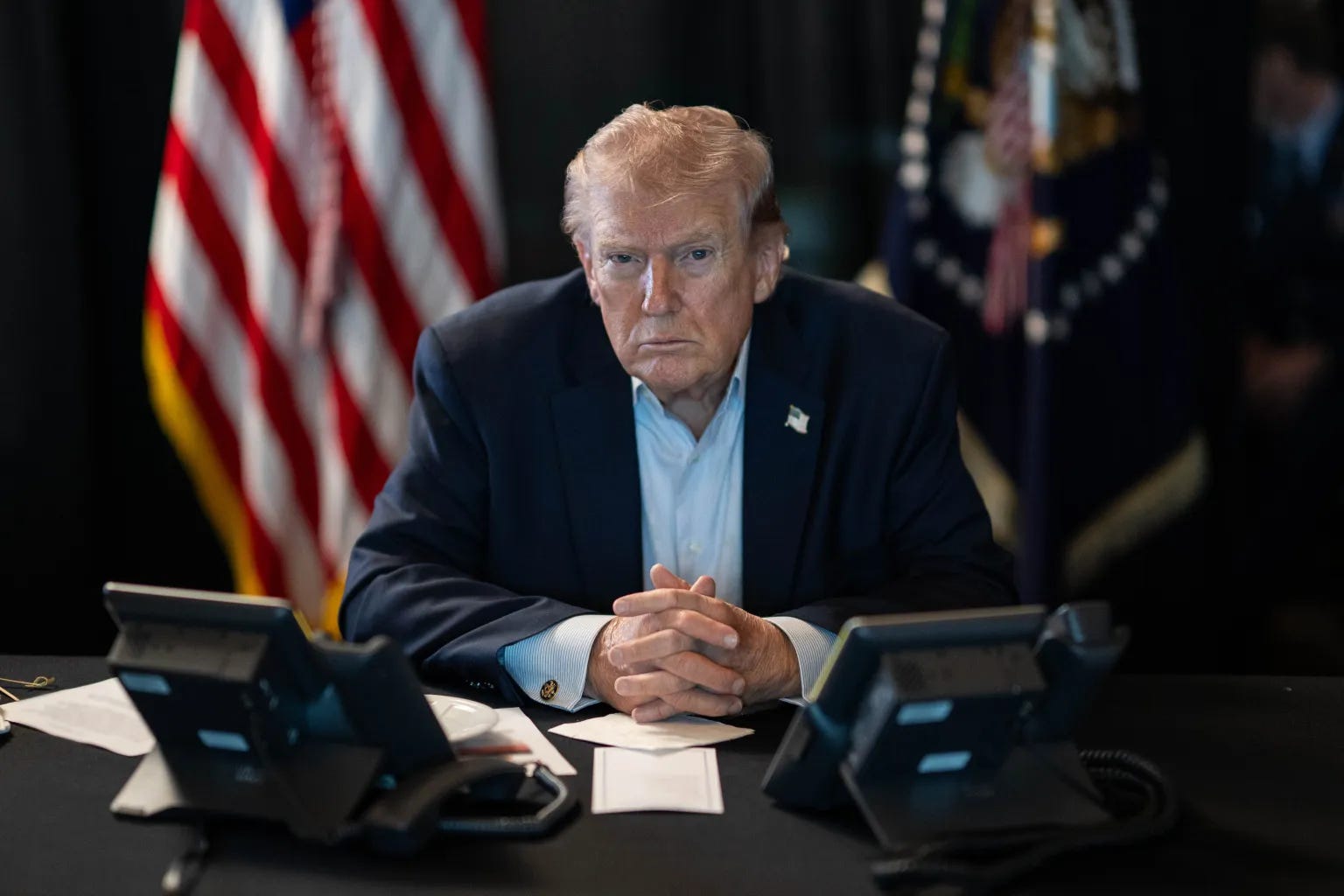
The House rejected an effort to limit President Trump’s authority to continue military operations against Iran, blocking a bipartisan resolution that would have required him to seek congressional approval.
The House voted 219–212 to stop consideration of a resolution aimed at ending offensive military operations in Iran that had not been explicitly authorized by Congress. This effectively blocked the attempt to restrict the president’s war powers, according to the New York Times.
While the vote fell largely along party lines, several members broke ranks in ways that underscored the political complexity of war‑powers debates. Four Democrats—Jared Golden of Maine, Marie Gluesenkamp Perez of Washington, Don Davis of North Carolina, and Henry Cuellar of Texas—joined Republicans to block the measure. On the other side, two Republicans—Ken Buck of Colorado and Thomas Massie of Kentucky—crossed over to support advancing it, citing concerns about unchecked executive authority .
Supporters of the resolution argued that Congress must reassert its constitutional role in authorizing military force, especially as tensions with Iran escalate. Opponents countered that restricting the president now would undermine national security and weaken America’s posture in the region.
Why this matters
The vote signals early congressional support for the administration’s military actions in the Middle East, even as some lawmakers in both parties express unease about the scope of presidential authority. It also highlights ongoing tensions over how the United States should manage its engagement with Iran and the balance of power between Congress and the executive branch.
The broader context
The debate reflects long‑running disputes over war powers, especially in conflicts where presidents have acted without new authorizations from Congress. The split within both parties shows how foreign policy and constitutional questions continue to scramble traditional political lines.
The vote comes amid escalating conflict with Iran and growing debate over how the United States should manage its involvement. The divisions within both parties highlight how foreign policy and constitutional questions continue to scramble traditional political alignments.