


By Samad Rafe
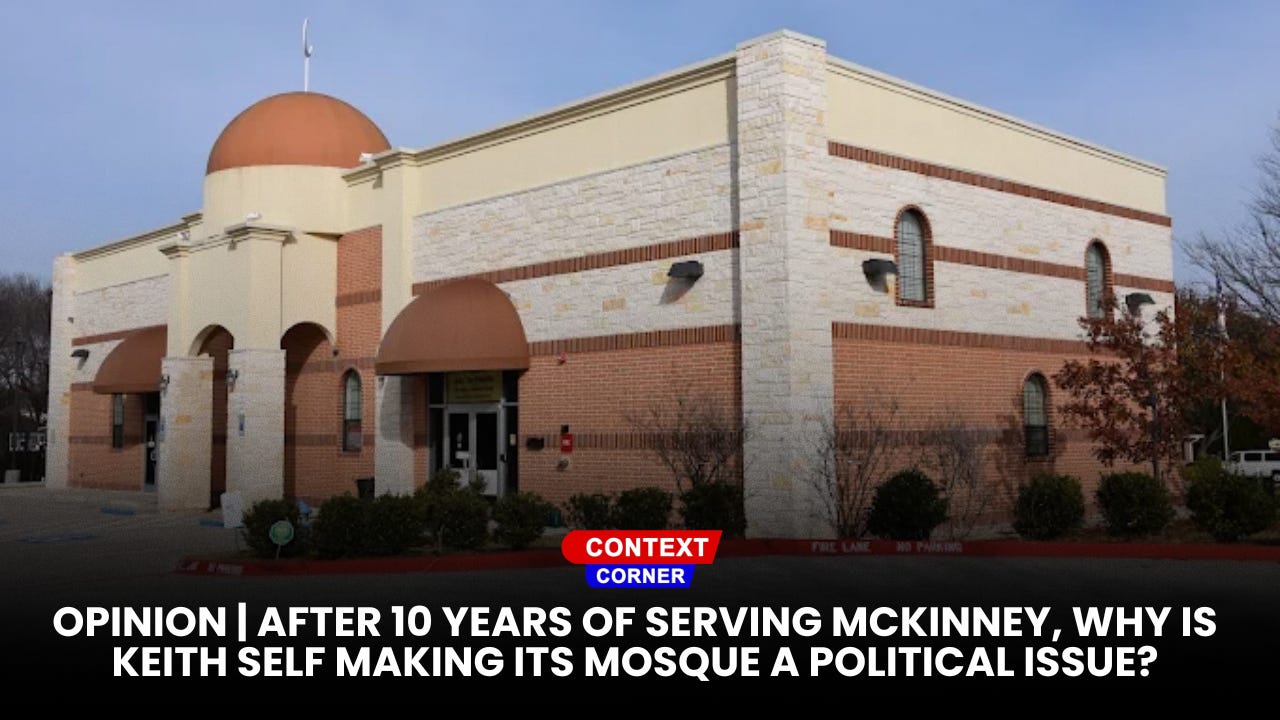
For more than a decade, the McKinney Islamic Association has quietly built relationships across the city.
It has welcomed neighbors into its mosque.
It has hosted interfaith dinners with pastors, elected officials, police officers, firefighters, educators, and civic leaders.
It has organized food drives, supported local food pantries, hosted free community health clinics, and encouraged its members to serve those in need regardless of faith.
For years, these efforts were seen as part of what makes McKinney a stronger community.
So why has that same mosque suddenly become the center of a political controversy?
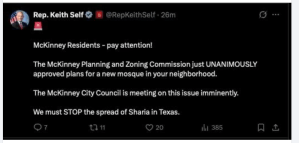
That is the question raised by Congressman Keith Self’s recent comments following the McKinney Planning and Zoning Commission’s unanimous 7–0 recommendation to approve the expansion of the McKinney Islamic Association’s campus.
After years of public meetings, engineering reviews, traffic studies, staff recommendations, and neighborhood discussions, the congressman urged residents to “stop the spread of Sharia in Texas.”
It is difficult to reconcile that message with the mosque’s record in McKinney.
A Decade of Building Relationships
The McKinney Islamic Association is not a new institution. It has worshipped and served the McKinney community from its Virginia Parkway campus since 1997. The proposed project is not the construction of a new mosque. It is the expansion of an existing campus that has spent years engaging with the community around it.
When neighbors had questions about the expansion, the mosque didn’t avoid them.It organized community meetings. One of those town halls, facilitated during former Mayor George Fuller’s administration, brought residents together to discuss the proposal, ask questions, and hear directly from mosque leadership. Whether attendees supported or opposed the expansion, the process reflected something important: engagement instead of isolation.
That is how communities grow together.
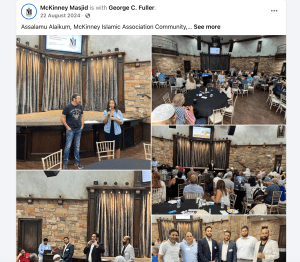
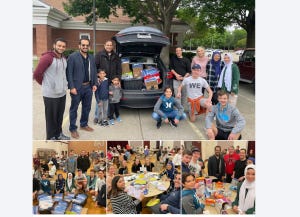
Townhall with neighbors in 2023 discussing the new mosque project that was facilitated by past mayor George fuller
Service Beyond Its Walls
The mosque's impact has never been limited to Friday prayers. Every Ramadan, the McKinney Islamic Association hosts interfaith iftar dinners, inviting pastors, elected officials, McKinney Police officers, firefighters, city staff, educators, and leaders from across the community to break bread together.
These dinners are not political events. They are opportunities to build trust between neighbors who may come from different backgrounds but share the same city. Throughout the year, mosque volunteers organize food drives, support local food pantry efforts, participate in service projects, and host free community health clinics for uninsured residents in partnership with volunteer physicians.

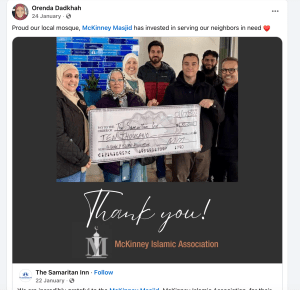
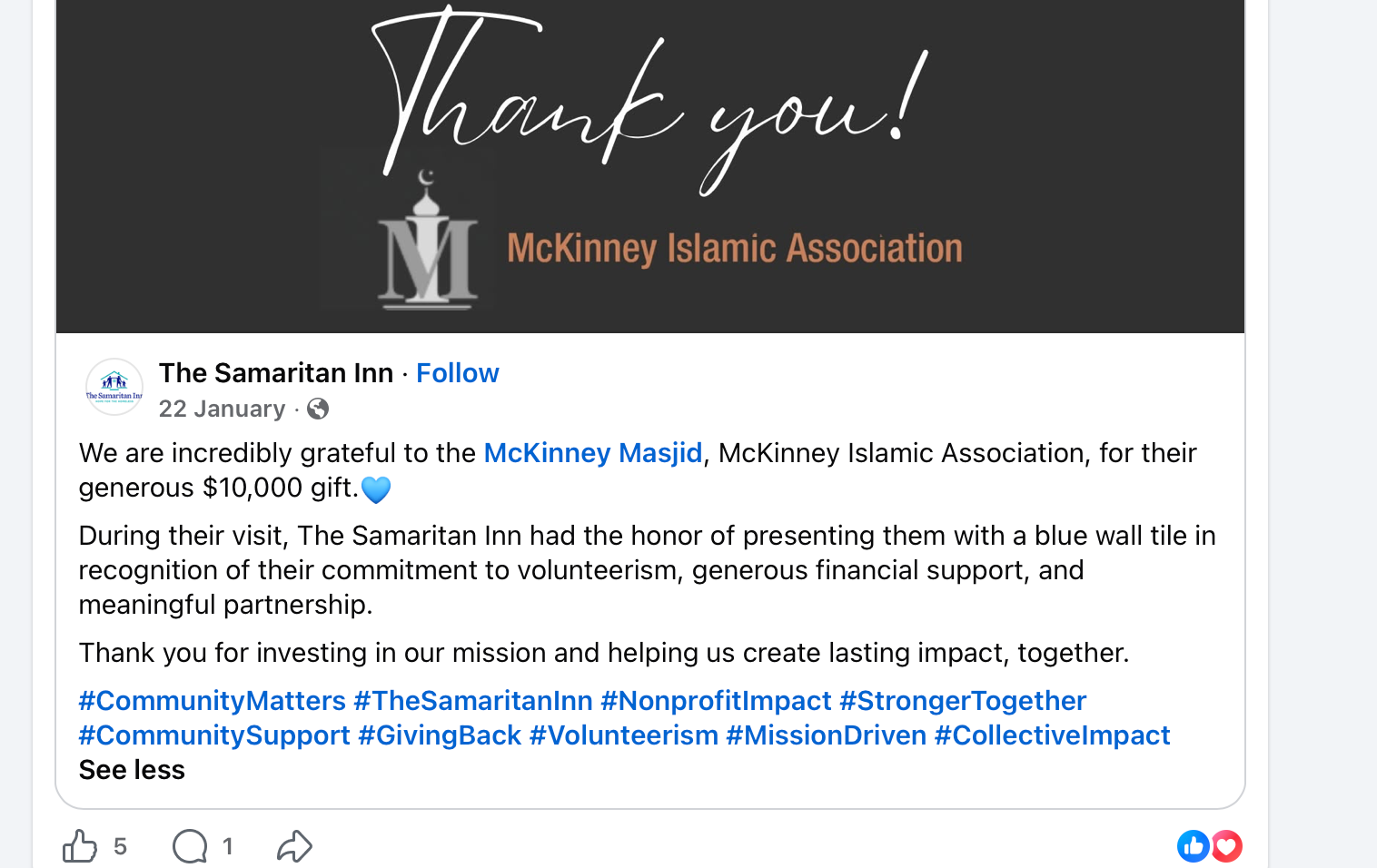
When local nonprofits needed help, the mosque stepped forward. Earlier this year, the McKinney Islamic Association donated $10,000 to The Samaritan Inn. In thanking the mosque publicly, The Samaritan Inn recognized not only the financial contribution but also its ongoing volunteerism and partnership in serving families experiencing homelessness.
That is not the record of an institution trying to divide a community. It is the record of one trying to strengthen it.
Recognized by the Community
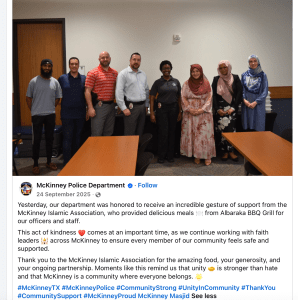
The McKinney Police Department has recognized that partnership as well.
In 2025, the department publicly thanked the McKinney Islamic Association for providing meals to officers and staff. The department described the gesture as “an incredible gesture of support” and praised its ongoing partnership with faith leaders. Its message ended with a sentence worth remembering:
“Unity is stronger than hate, and McKinney is a community where everyone belongs.”
Those words were not written by the mosque. They came from McKinney’s own police department. Mayor Bill Cox has also consistently affirmed that McKinney is a welcoming city for people of all faiths and backgrounds. Regardless of political differences on other issues, his public message has remained clear: McKinney is a community where everyone should be treated fairly and respectfully under the law.
That is the kind of leadership that brings people together.
So Why Now?
For nearly five years, the mosque has worked through McKinney’s public planning process.
Engineering reviews.
Traffic studies.
Neighborhood meetings.
Planning staff recommendations.
Public hearings.
Finally, a unanimous recommendation from the Planning and Zoning Commission.
Nothing about this project is sudden. Nothing about it is secret. The mosque didn’t change. Its mission didn’t change. Its commitment to McKinney didn’t change. The politics around it changed. That raises an important question.
Why is a mosque that has spent more than a decade serving its neighbors suddenly being portrayed as a threat only after receiving routine zoning approval to expand?
Reasonable people can disagree about zoning.
Traffic.
Parking.
Infrastructure.
Drainage.
Those are legitimate public issues. But suggesting that an established place of worship represents the “spread of Sharia” moves the conversation away from planning and toward fear.
The Issues That Matter
Many North Texans are worried about issues that directly affect their families. The rising cost of health care. The rapid expansion of large data centers and their impact on neighborhoods, infrastructure, and utilities. Federal spending. America’s role in overseas conflicts.
These are complex challenges that deserve thoughtful leadership.
Instead, one of the biggest political conversations this week became a mosque expansion that has been openly discussed in McKinney for years.
Judge Institutions by Their Record
America’s commitment to religious liberty is simple, Churches, Synagogues, Temples, Mosques.
Each deserves the same protection under the Constitution. If any institution is to be judged, it should be judged by its record.
The McKinney Islamic Association’s record includes:
More than a decade serving McKinney.
Annual interfaith iftars with police, firefighters, pastors, elected officials, and civic leaders.
Food drives and food pantry support.
Free health clinics for uninsured residents.
Community volunteer projects.
Partnerships with local nonprofits.
A $10,000 donation to The Samaritan Inn.
Public recognition from the McKinney Police Department.
Years of open dialogue with neighbors about its expansion.
That is a record built over years—not during an election cycle.
What Kind of McKinney Do We Want?
The question before McKinney is no longer simply about a site plan.
It is about what kind of city we want to be. One that judges neighbors by years of service.
Or one that allows fear to overshadow a decade of community engagement.
McKinney has spent years proving that people of different faiths can work together, volunteer together, solve problems together, and build lasting friendships.That story deserves to be told.
Because in the end, the mosque didn’t suddenly become part of McKinney.
It already was. The only thing that changed was the politics surrounding it.